
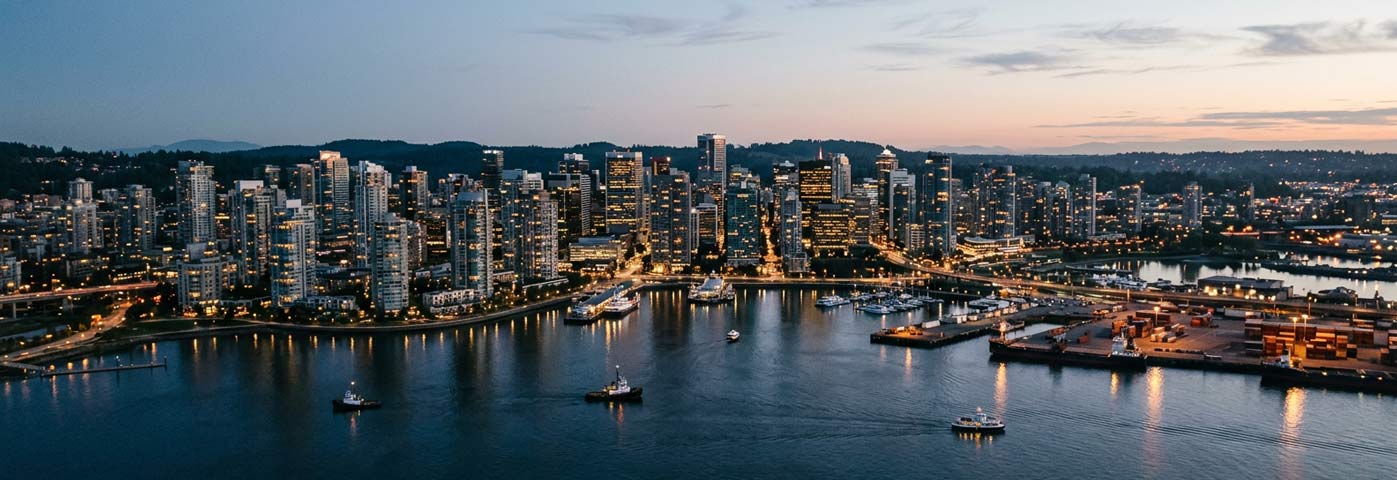
A live feed cannot lie. No edits, no cuts – just whatever the camera sees at this exact moment. We find that quietly compelling across very different contexts: weather over False Creek, a ship moving through the harbour, a live casino dealer mid-deal in a broadcast studio. The principle is the same in every case. This is what we’ve learned about why that feeling of presence matters, and how the technology either delivers it or doesn’t.
The Unique Feeling of “Unfiltered Reality”
A webcam does not promise you the best angle or the perfect sunset. It promises you what is there. Rain on the lens. Fog sitting low on the North Shore mountains. A sudden patch of evening light cutting through the clouds. Those imperfections are not flaws. They are proof that the feed is alive.
Key concept: Telepresence
Psychologists who study media describe this as telepresence – the illusion of “being there” inside a mediated environment, with actual or virtual others. Telepresence research has long focused on how technology can recreate face-to-face conversations, but a simpler sense of closeness matters just as much: the ability to feel connected to a place without necessarily having to interact with it consciously.
Webcams deliver that feeling quietly and reliably. You are not controlling anything. You are just watching, and that is enough.
This unfiltered quality builds trust. Pre-recorded video can be polished and staged. A live feed cannot. When you look at a city webcam, you know that what you see is what someone at that location would see at the exact same moment. That authenticity is the foundation of webcam presence.
Where Webcams Are Used to Improve Interaction
Webcams have moved far beyond the novelty of seeing a remote location. Today, they are embedded in systems that help people make decisions, stay safe, and feel connected.
Traffic and weather monitoring
It is one of the oldest and most practical applications. State transportation departments maintain networks of webcams to assist with maintenance activities such as plowing, sanding, or applying ice-fighting materials, and to help the public understand conditions before they drive. In many national parks, webcams show current weather conditions with the date, time, and location overlaid on the image, so viewers know exactly what they are looking at.
Tourism and destination previewing
It has grown into a global industry. Resorts roll out mountain webcams so skiers and snowboarders can check conditions before making the trip. Global platforms host live views from destinations around the world, attracting millions of online visitors each month and functioning as permanent “windows” for city promotion. For many people, watching a webcam is the next best thing to being there, and sometimes it is the first step toward booking a ticket.
Remote work & webcam presence:
Over two-thirds of professionals report that turning their camera on helps them perform better even in remote setups with multiple distractions. A webcam does not just show a face; it signals presence, attention, and accountability, creating an environment closer to in-person interaction than phone calls or instant messaging alone.
What Makes a Good Webcam Experience: Latency, Resolution, Stability
Presence depends on technology that stays out of the way. Three factors determine whether a webcam feed feels immediate or frustrating.
Factor | Threshold | Why It Matters |
|---|---|---|
Latency | 3–5 sec (passive) / <500 ms (interactive) | Passive city views tolerate delay; interactive feeds (live games, meetings) require sub-500 ms |
Resolution | 1080p minimum / 4K preferred | Low-definition breaks the illusion of presence; 4K approaches actual human vision |
Stability | Consistent delivery, no buffering | Frame drops and disconnections break presence; adaptive streaming maintains flow |
Latency is the delay between the real event and what appears on screen. For most passive viewing, watching city skylines or harbour traffic, a lag of 3–5 seconds is barely noticeable. But interactive applications are far less tolerant. Ultra-low-latency streaming technology, with sub-500-millisecond delay, is critical for seamless and interactive viewer experiences.
Resolution matters for detail. Low-definition feeds make it hard to read signs, recognise faces, or appreciate landscapes. Modern applications increasingly use 4K cameras and professional-grade lenses. The higher the resolution, the closer the feed comes to actual vision.
Stability is about consistent delivery. Buffering, frame drops, and disconnections break the spell of presence. Adaptive streaming technology adjusts video quality based on the viewer’s internet connection, ensuring that the feed keeps moving even when bandwidth dips. A stable stream disappears into the background. An unstable one becomes the only thing you notice.
When all three work together – low latency, high resolution, consistent stability – the camera feed stops feeling like technology and starts feeling like a window.
Live Casino Video: The Hardest Webcam Application to Get Right
Among the most technically demanding applications of live video is the broadcast of real-time casino games. The purpose here is not to argue for or against the activity, but to examine how far webcam technology has come in creating mediated presence.
A professional live casino setup operates at broadcast quality. Purpose-built studios house specially designed gaming tables with embedded sensors that register every card drawn and every chip placed. Multiple high-definition cameras capture the action from different angles, and a Game Control Unit encodes the video data, translating it into a stream that browsers and apps can handle while syncing physical game actions with the digital betting interface.
How the technology works:
The cameras do not just transmit video, they read it. When the dealer flips a card, optical character recognition identifies it instantly, and the viewer’s screen updates with the result. Live casinos tackle latency by using WebRTC, a protocol that passes video directly to browsers without plug-ins, combined with 4K cameras, professional-grade lighting, and encoders that rival broadcast studios.
But the most important goal is not technical. It is psychological. When the stream runs smoothly, the viewer stops thinking about cameras, servers, and networks. The table becomes a place again. That is the same illusion of presence that a city webcam creates when you forget you are looking at a screen and simply watch the light change over downtown.
The Psychological Benefits
Beyond practical uses, webcams offer genuine psychological benefits. Research on webcam travel has found that virtual experiences through live cameras stimulate stress reduction, restoration, and relaxation. Watching a live feed from a favourite city or natural landscape can uplift spirits and create feelings of freedom and calm.
Engagement and attention research:
There is a growing body of work on webcam-based facial coding and attention tracking, measuring how audiences respond to visual content in real time, scoring engagement and emotional valence as viewers watch. Even simple head movements captured by a built-in camera can serve as a cost-effective, scalable metric of engagement: whether the viewer is leaning in, looking away, or staying locked on the feed.
These findings point to something fundamental. A webcam is not just a tool for seeing. It is a tool for feeling. Whether you are watching the sun rise over a mountain range, checking the queue at a bridge crossing, or observing a live broadcast from a studio halfway across the world, the camera gives you a version of presence that does not require travel or tickets.
From city skylines to harbour traffic to broadcast casino studios, webcams have quietly become one of the most reliable ways to shrink distance. They do not promise a curated experience. They promise the truth of the present moment – rain on the lens, fog on the ridgeline, the slow turn of a ship or the flip of a live dealer’s card. In return, they offer something simple and rare: the feeling of being there, without moving at all.